
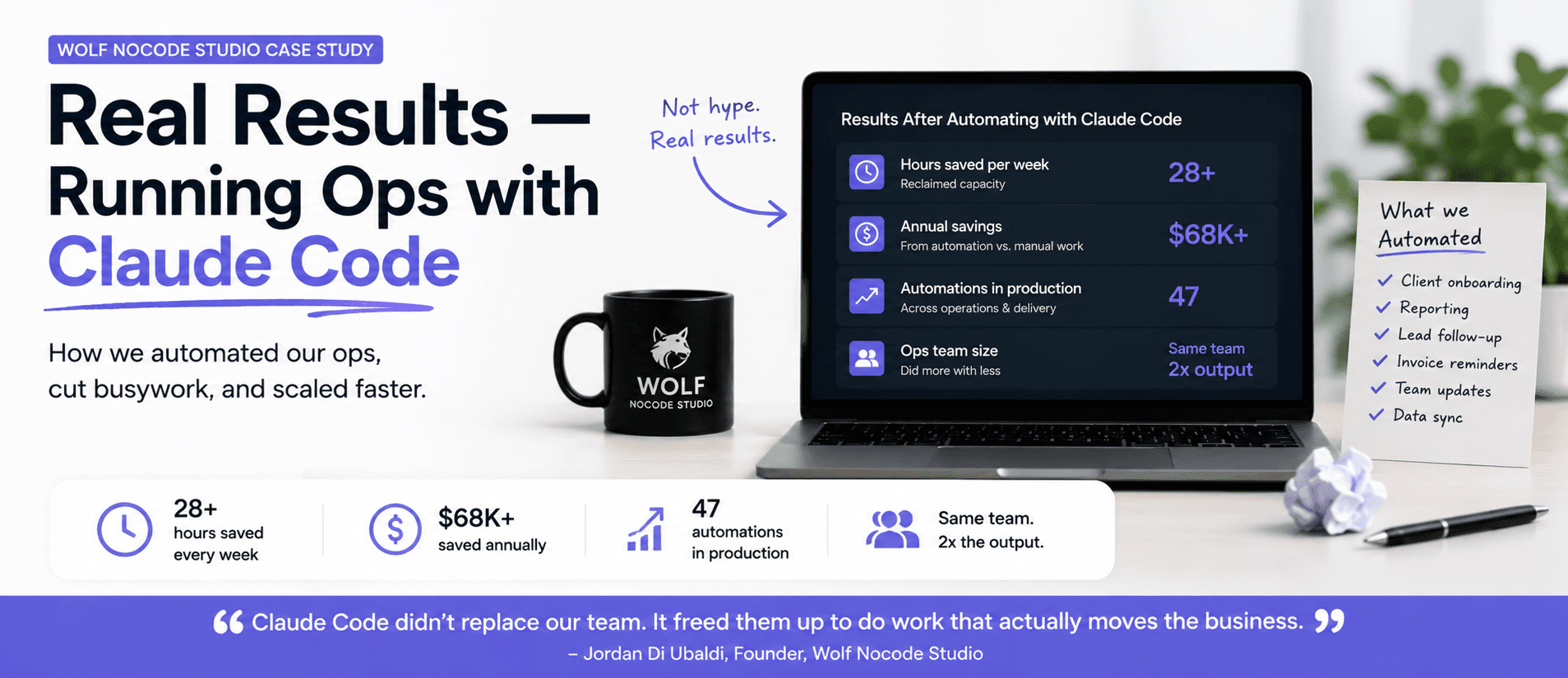
How I Run My Agency on Claude Code: Wolf Nocode Case Study
Wolf Nocode Studio builds automation for growing businesses. Here is exactly how we run our own…
Read moreJahanzeb Khan
Founder
9 min read
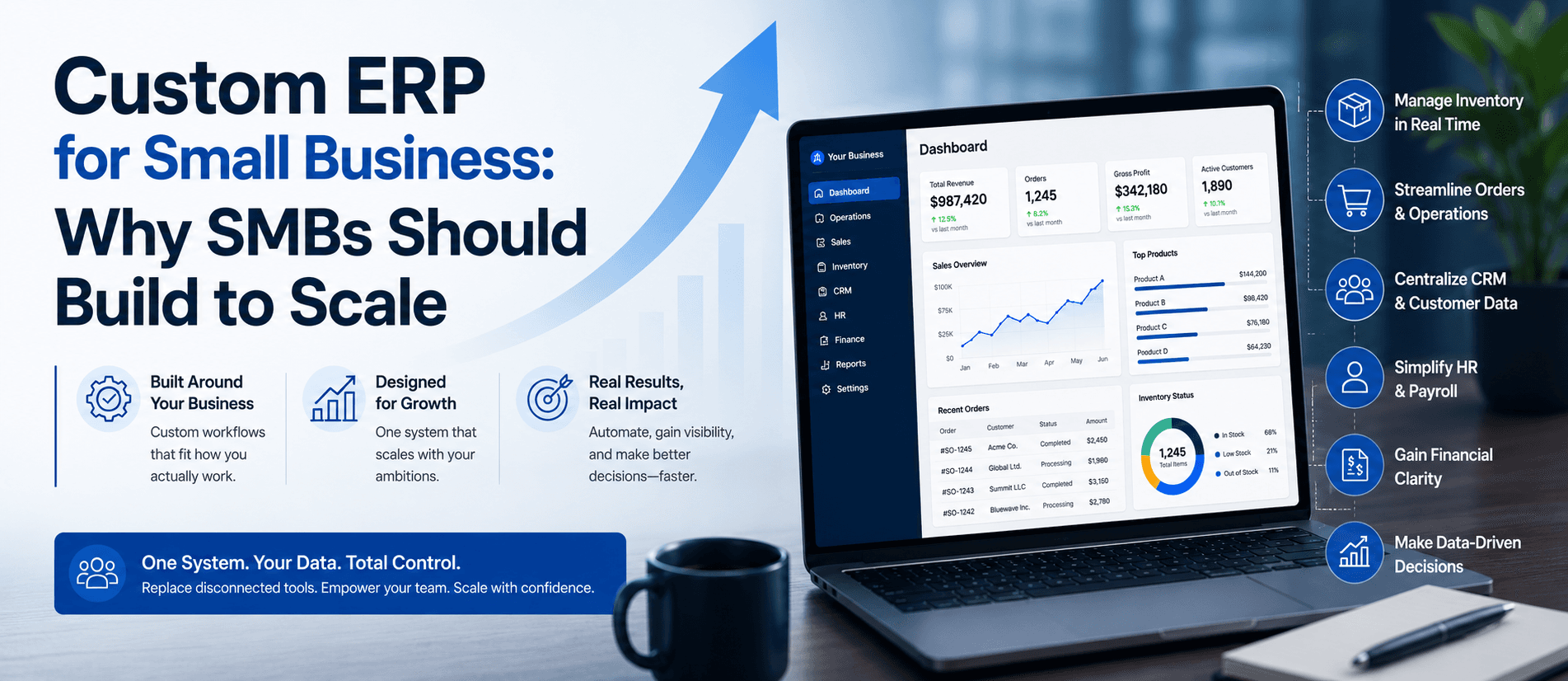
Most small business owners think "custom ERP" means a six-figure development project, a year of consultant meetings, and a system nobody ends up using. That belief is keeping growing businesses stuck on software that doesn't fit. A custom ERP for small business, built on no-code tools, ships in weeks at a fraction of what most people assume it costs.
Off-the-shelf ERP is built for the average business. If your business is average, it probably works. Most growing SMBs are not average. They have workflows that don't fit standard templates, approval chains specific to their industry, and processes built around how they actually operate — not how a software vendor imagined they would.
The result is a system you spend months configuring, then years working around. Nearly half of all businesses that start with off-the-shelf ERP eventually switch to a custom SMB ERP solution. When the software doesn't fit the process, the team bends the process to fit the software. That is where the real cost begins.
Off-the-shelf ERP pricing starts at $40 per user per month and climbs fast. Add implementation fees, training, integration costs, and the consultants needed to configure it to your workflow, and the total regularly exceeds $40,000 before going live.
| Factor | Off-the-Shelf ERP | Traditional Custom ERP | No-Code Custom ERP |
|---|---|---|---|
| Upfront cost | $10K–$120K+ | $500K–$1.5M | $4K–$10K |
| Time to live | 3–9 months | 12–24 months | 4–8 weeks |
| Fit to your workflow | Generic | Perfect | Perfect |
| Ongoing licence fee | $40–$150/user/month | None | 3k/month |
| Requires a dev team | No | Yes | No |
A custom ERP is a system built around your exact business processes. Not a pre-built product you configure into something approximate. It handles the specific workflows your team runs every week, connects the tools you already use, and gives leadership one place to see what is actually happening across the business.
For most SMBs, that covers some combination of: operations management, order tracking, inventory, HR workflows, reporting, and CRM. Not all of these. The ones you actually need, built in the right order, without paying for modules you will never open.
The misconception is that "custom" always means expensive. For traditional software development, it does. A single custom-built ERP module from a dev agency runs $180,000 to $400,000. That is not the only option anymore.
The Replace Don't Patch Principle says this: connecting 6 broken systems gives you a more connected version of the same problem. Most growing SMBs understand this intuitively by the time they contact us. They have QuickBooks for accounting, a separate inventory tool, a CRM nobody fully uses, payroll software that doesn't talk to any of it, and spreadsheets filling every gap.
The cost of that arrangement is not just the software licences. It is the hours spent reconciling data across systems, the mistakes that happen when something is updated in one place but not another, and the decisions that never get made because getting accurate numbers requires three people and an afternoon.
One ops team we spoke to was spending 14 hours per week on manual data re-entry alone. That is not a productivity problem. It is a structural one. Adding another SaaS tool on top of it makes the structure worse, not better.
No-code development changed who can afford a custom system. Platforms like Bubble allow us to build production-grade business software at a speed and cost that traditional development cannot match. A system that would take 12 months and $500,000 to build with a traditional dev team can ship in 6–8 weeks for $4,000–$10,000.
The key shift is not the price alone. It is the risk profile. A $10K system that goes live in 8 weeks means you are running your actual processes through it within two months. You find out what works and what needs adjusting before you have committed a year and half a million dollars.
We built the Employee OS for a global advisory firm entirely on Bubble. Their original brief was to fix a Sage integration problem. We told them not to bother. Connecting 6 broken regional Sage instances would have produced a more connected version of the same problem. We recommended replacing Sage entirely. The system went live in 8 weeks, with 770 employees across 6 countries onboarded onto one unified platform. It has been in active use for over 2 years.
Your custom ERP should handle what your team currently does manually, across multiple tools, every single week. Not everything. The right things, in the right order.
We call this the operating layer. It is what sits underneath the product your customers see: the internal workflows, the reporting, the approvals, the data that should flow automatically but currently requires someone to copy it from one place to another. Most businesses discover they need this layer after they have already launched. The ones who build it from the start never have to bolt anything on.
For ERP for growing businesses specifically, the three highest-value things a custom system delivers are: eliminating manual data re-entry between tools, giving leadership real-time visibility into what is happening across the business, and cutting the number of systems the team has to log into every day.
See our guide on signs your business has outgrown QuickBooks.
A custom ERP makes sense when your team spends more time managing the tools than running the business. If you have 15 or more employees, more than 10 hours per week of manual workflows that should be automated, and 3 or more disconnected systems your team has to navigate daily, you are already paying for a custom system. The cost is just hidden in hours, errors, and the decisions you cannot make because you do not have clean data.
Under 10 employees with a simple, stable process? Off-the-shelf is probably the right call for now. But the moment your operation becomes complex, every month you delay is a month of compounding cost.
The businesses that get this right do not think of ERP as a technology decision. They think of it as a process decision. Map the workflow first. Build the software around it. Get that order right and the system serves the business through multiple stages of growth, you extend it rather than rebuild it. That is the difference between software that follows the business and software that holds it back.
If your team is running on a patchwork of tools that do not talk to each other, a 20-minute call will tell you whether a custom ERP is the right move and what it would realistically take to build.
We map every workflow before writing a line of code. If no-code is not the right fit for your situation, we will tell you that.
A custom ERP for small business is a software system built around how a business actually operates: its workflows, approval chains, data needs, and reporting requirements. Unlike off-the-shelf ERP, it is not configured to fit a generic template. Built from the ground up to match the business, it has no unused modules, no workarounds, and no recurring licence fees.
A no-code custom ERP from Wolf Nocode Studio costs $4,000–$10,000 as a one-time build with no ongoing licence fee. Off-the-shelf ERP costs $40–$150 per user per month. A 20-person team pays $800–$3,000 per month before implementation and support fees. Over two years, the custom build costs less. And it actually fits the workflow.
A no-code custom ERP typically takes 4–8 weeks from kickoff to going live. Traditional development takes 12–24 months. The gap comes from platforms like Bubble, which handle infrastructure that traditional builds start from scratch. We built the Employee OS for a global advisory firm in 8 weeks. 770 employees across 6 countries. Still in active use today.
With no-code development, yes. The real question is whether you can afford not to. Every week your team spends on manual data entry and reconciling disconnected tools is a week of compounded cost. At $4,000–$10,000 for a one-time build, a no-code custom ERP typically pays for itself within the first year in hours saved alone.
More SaaS tools means more logins, more connections to manage, and more places where data falls out of sync. A custom ERP replaces the stack with one system. One source of truth. One workflow. The cost of tool sprawl is time spent moving data between systems. That disappears when everything runs in one place.
The signal is not revenue. It is operational complexity. When your team maintains more spreadsheets than workflows inside QuickBooks, the system has hit its ceiling. Specific triggers: 3 or more disconnected tools, more than 10 hours of manual data re-entry per week, or no way to see inventory, orders, and margins in one place.
Yes. No-code platforms like Bubble are production-grade infrastructure, not prototyping tools. The Employee OS we built on Bubble serves 770 employees across 6 countries and has been in active use for over 2 years. Career Friendly, also built on Bubble, runs with 4,800+ active users, 2,866 schools, and 800+ businesses. No-code scales. The limit is not the platform.
Jahanzeb Khan is the founder of Wolf Nocode Studio. He has built 25+ no-code and AI-powered products since 2020 for funded startups, enterprise teams, and first-time founders — using Bubble, v0, Cursor, Lovable, and n8n.
Wolf Nocode Studio builds automation for growing businesses. Here is exactly how we run our own…
Read more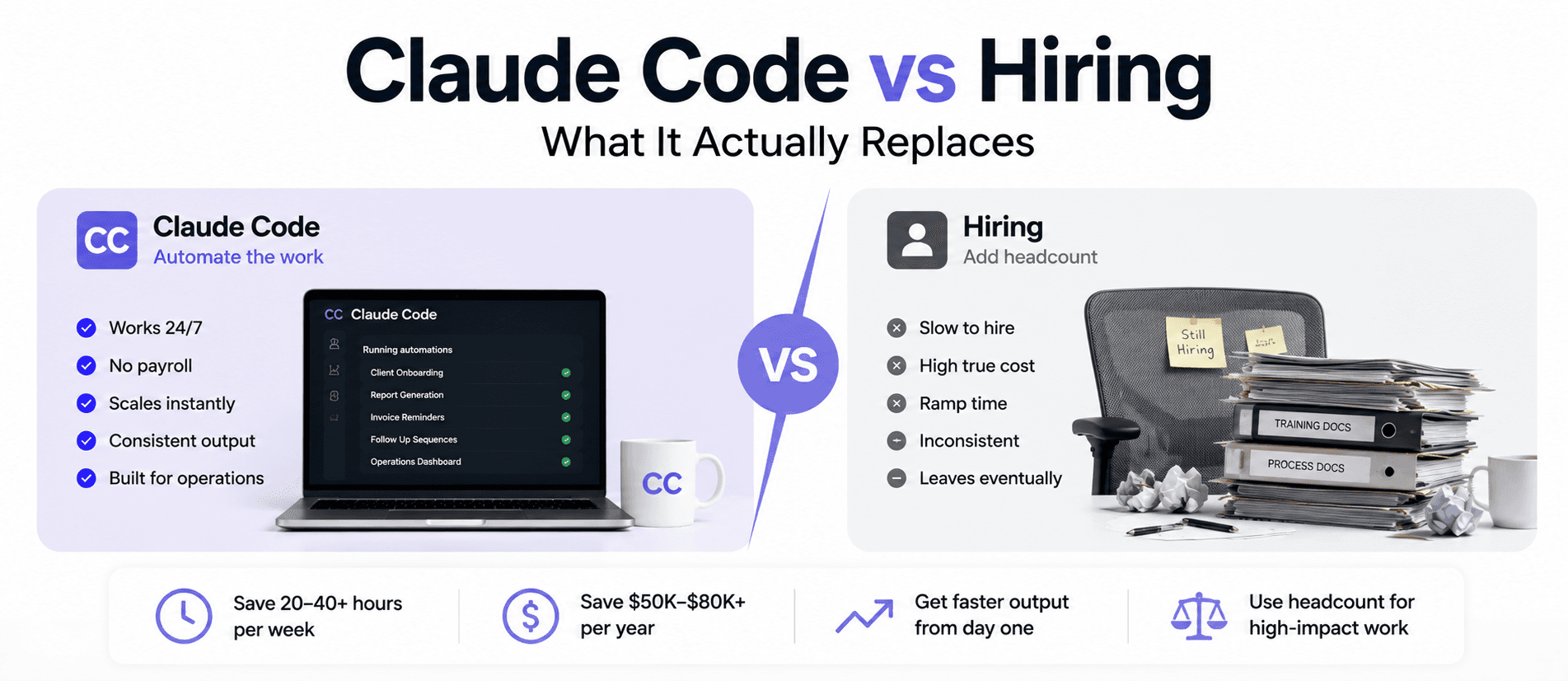
The question is not whether to hire or automate. It is which specific hours you pay $50/hr for…
Read more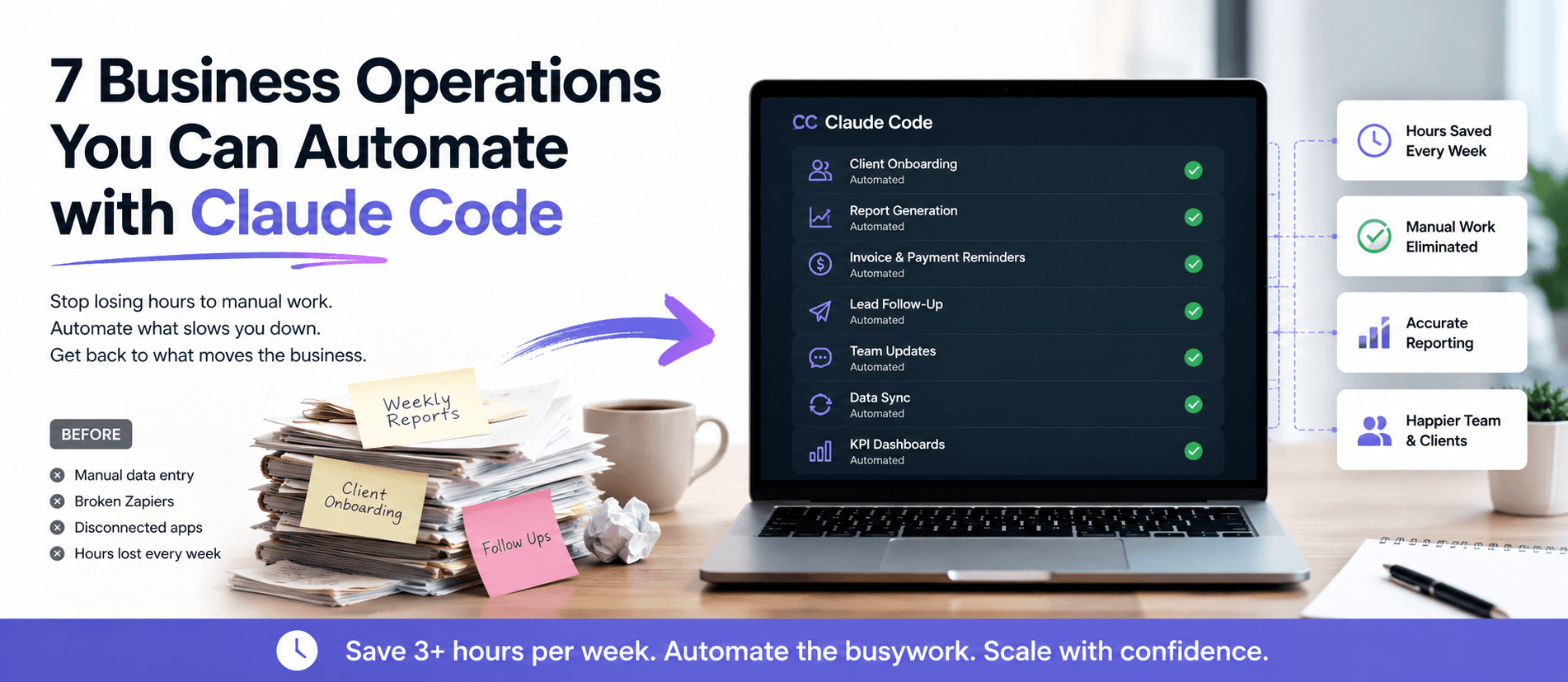
Your ops team spends hours each week on work that should already run itself. Here are 7 specific…
Read more